
What is a RAL Colour? Your Simple Guide
Back to Colour HubRAL is a code-based colour matching system that’s used to define exact colours for paint, coatings and plastics. It means that everyone, from manufacturers to customers, is working from the same reference and knows what to expect.
- It’s a standardised colour reference system, not a paint brand. Any paint manufacturer can use RAL colours.
- Every colour has its own unique numeric code, plus a name.
- There are several RAL systems: Classic, Design and Effect.
- Hurst supplies colours from both the Classic and the Design systems.
- Any Hurst door can be sprayed in a RAL colour, including our composite, S‑Class, and fire doors, as well as our PVC‑U panel ranges.
Where does RAL come from?
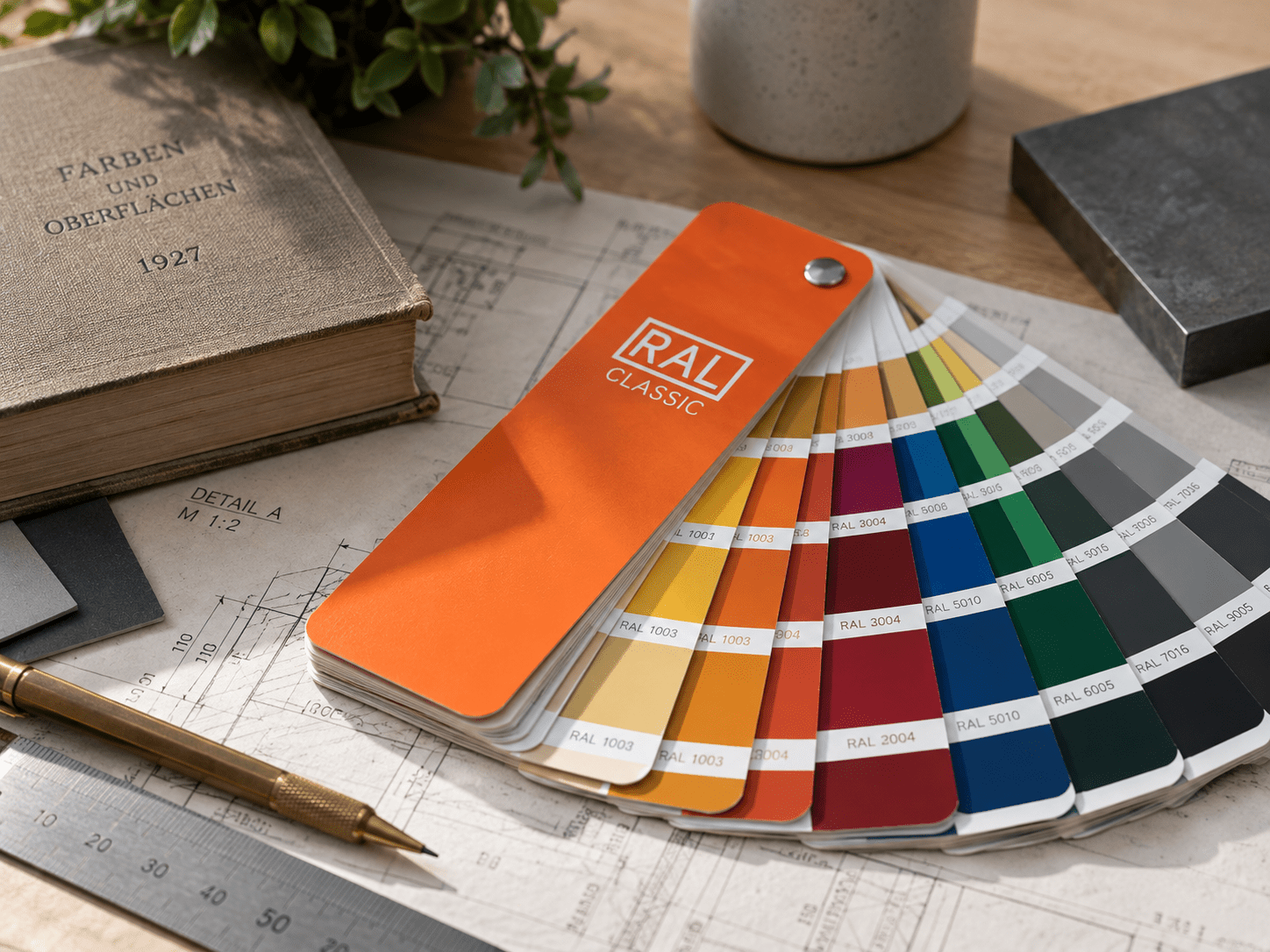
RAL – which stands for Reichs-Ausschuß für Lieferbedingungen und Gütesicherung (roughly translated: National Commission for Delivery Terms and Quality Assurance) originated in Germany in 1927. Before RAL, businesses and customers used physical samples to show colour, which was inconsistent and inefficient.
The RAL reference system replaced this with a simple, precise reference system.
What is a RAL code or RAL number?
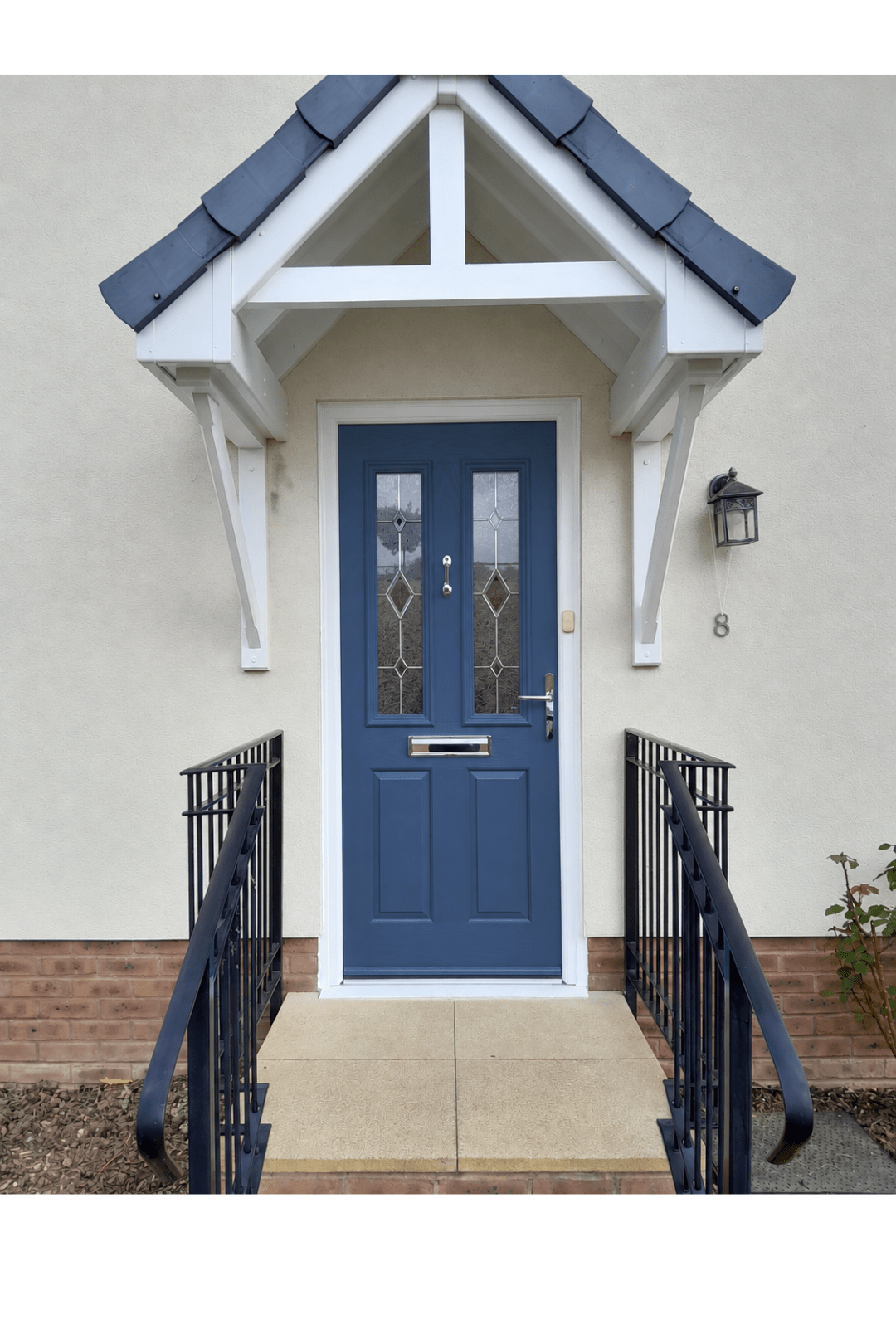
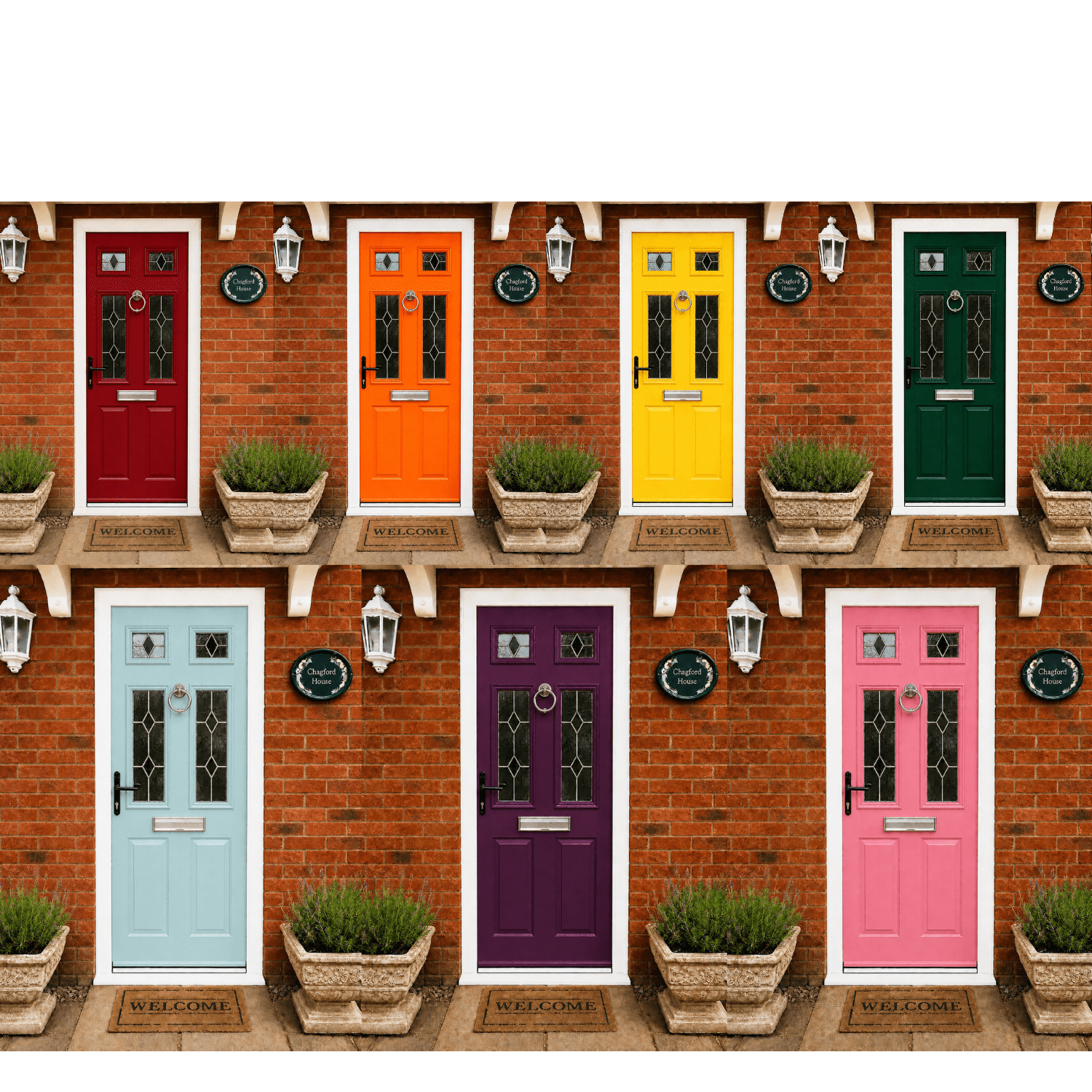
A RAL code is a numeric code that describes a specific shade of colour. So for example, this door is RAL 5000 Violet Blue. Every colour has a name as well as a number, to help avoid confusion if the digits get mixed up.
RAL Classic uses a four digit code. RAL Design uses seven digits, and RAL Effect uses three digits with an additional identifier that can be a number or a letter.
The first digit in a RAL code denotes the colour family. This can be helpful when you’re browsing colours to narrow down your choices.
- Yellow
- Orange
- Red
- Violet
- Blue
- Green
- Grey
- Brown
- White and black
The other digits are assigned as new colours are added to the RAL palette. So for example 015 won’t necessarily be two shades lighter than 017.
What is the RAL colour chart?
Because the whole point of RAL colour is repeatable accuracy, just looking at a colour on your phone or laptop isn’t good enough. Different screens render colours differently, and you’d be surprised how much variance there can be.
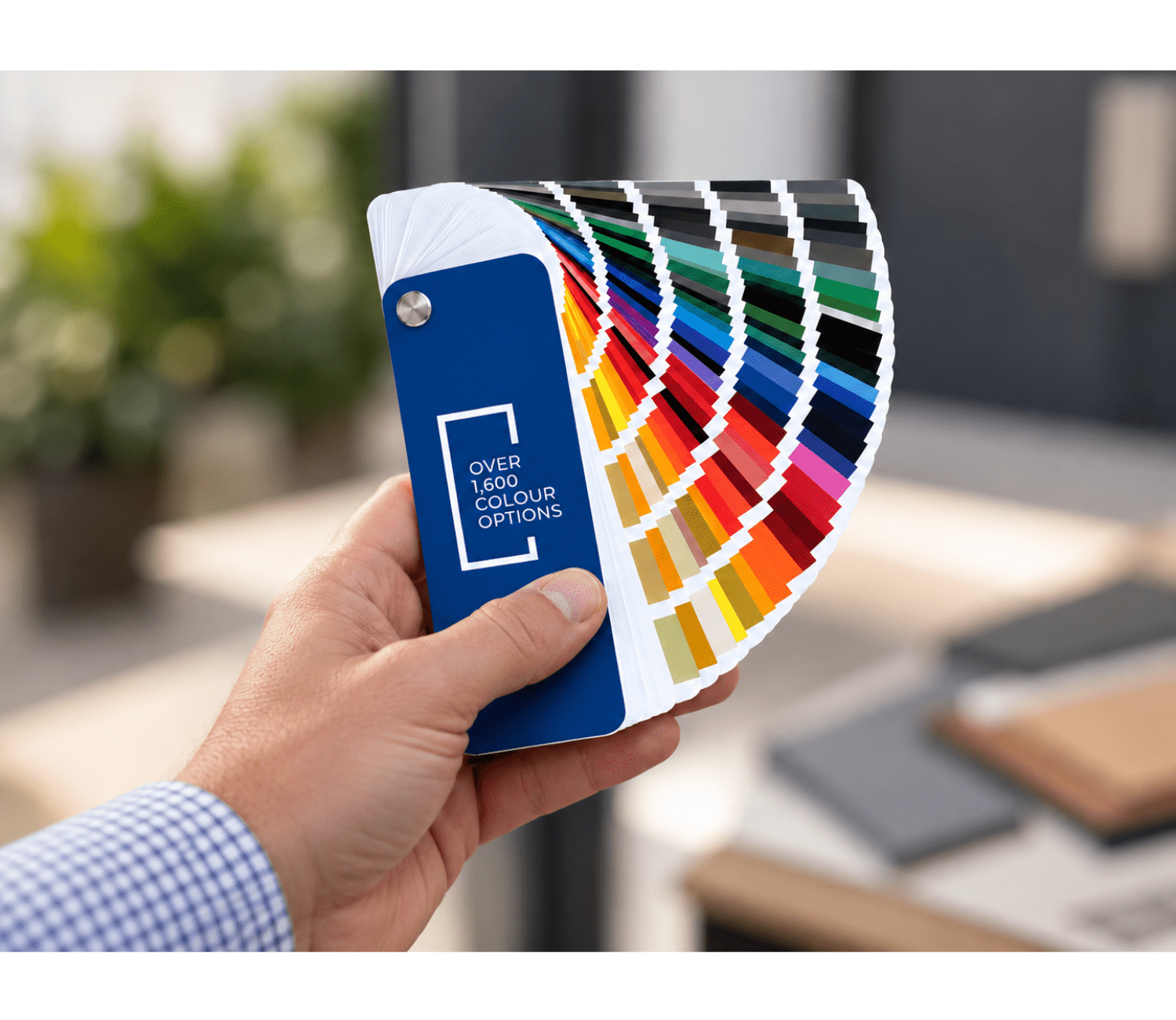
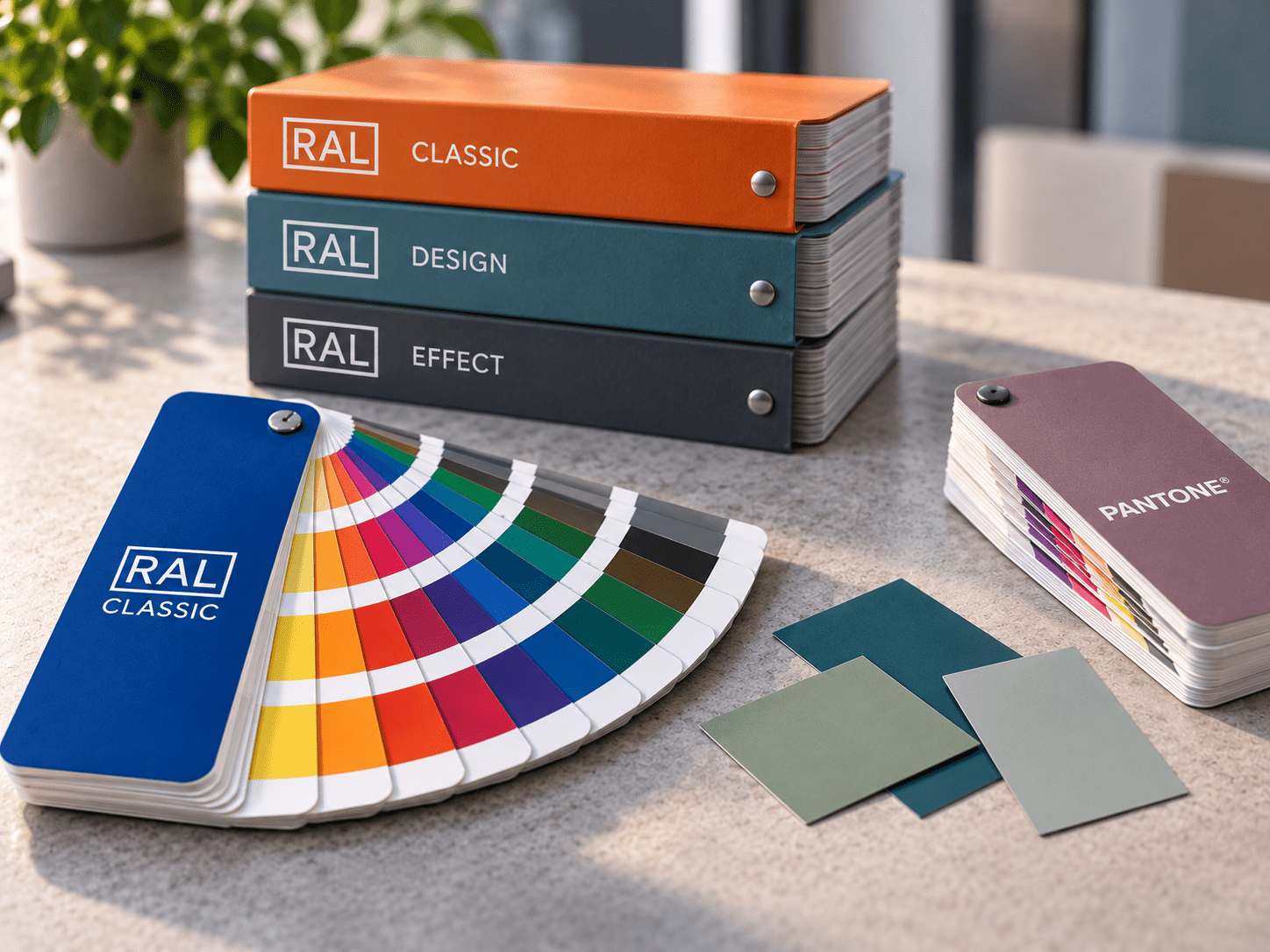
A RAL colour chart is a physical set of colour swatches, all reproduced accurately so you know exactly what you’re looking at.
If you want a unique RAL colour for your front door, speak to your installer. They’ll be able to take you through the next steps. Or you can find out more about our colour range first.
What is RAL paint?
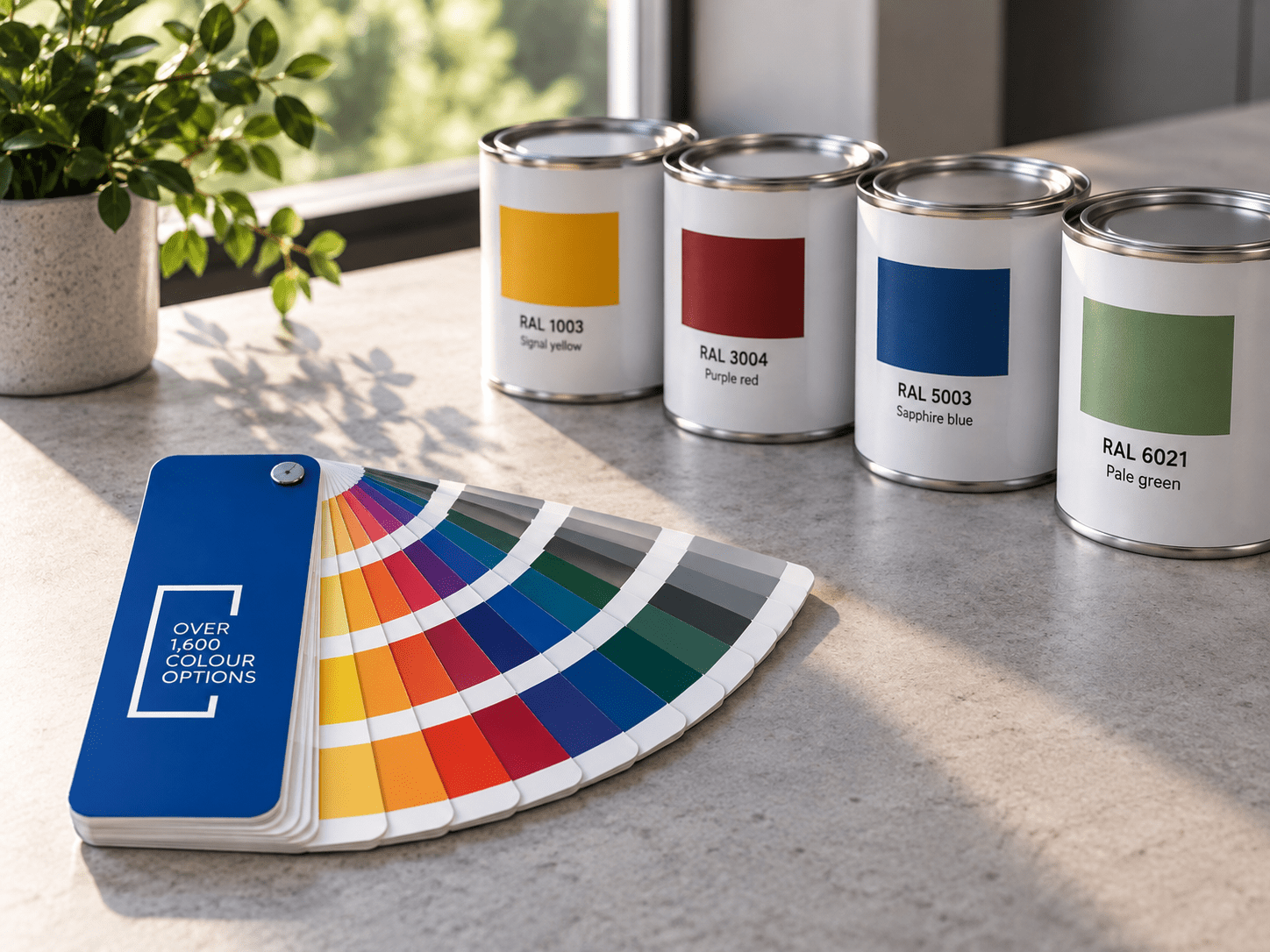
RAL is not a paint brand. It’s purely a reference system that paint, coating and powder coating manufacturers can use to match their colours accurately. So any paint that’s mixed to a RAL specification is technically RAL paint.
Why does RAL matter when choosing your door colour?
Well the biggest deal is that you get a huge choice of colour. We can supply your door in more than 1,600 RAL colours, which is a lot more than the sixteen or so that’s been the standard for doors for years.
It also means you can match your door and frame colour to existing brickwork, windows or anything – or get them in a perfectly complementary or contrasting colour. It’s up to you!
Choosing your door colour is a really important decision, so it’s worth spending some time to get it right.
How many RAL colours are there?
There are over 2,500 colours across the three RAL systems. 216 in RAL Classic, 1,825 in RAL Design and 490 in RAL Effect.
An existing colour, like a Pantone or paint brand shade, can be closely matched to RAL. Different colour systems are built in different ways, so an exact match isn’t always possible. If you want to match an existing colour, the best thing to do is compare it to a RAL chart and find the closest match.

